


PML
Magnetic Drum Separator
Magnetic Drum Separator
Starting from Rs.56,905
Download Catalogue (PDF)


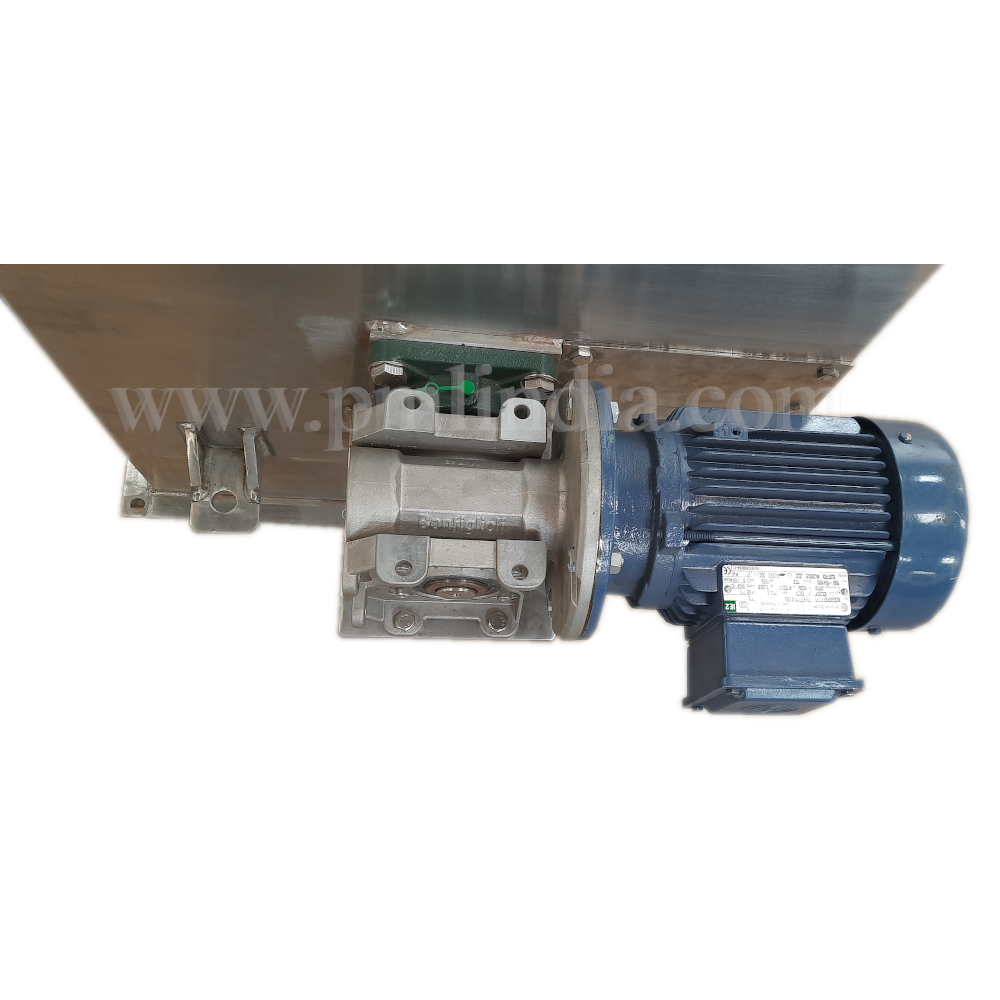
Product Details
At a Glance
A magnetic drum separator (also called a rotary magnet or in-line drum magnetic separator) is a self-cleaning rotating drum that continuously removes ferrous contamination from high-volume bulk and granular material without stopping the line. PML's drum separators are rated up to 4,500 Gauss for continuous operation up to 250°C, supplied in Stainless Steel 304/316.
High-volume bulk and granular lines can't stop for cleaning every few minutes — they need continuous separation. The PML Magnetic Drum Separator — also called a rotary magnet or in-line drum magnetic separator — is a self-cleaning system built exactly for that: a rotating drum with a stationary internal magnet that captures ferrous fines, nuts, bolts, pins, nails and other tramp metal from free-flowing material without ever pausing the line.
Supplied complete with Stainless Steel 304/316 housing and drive, or as a standalone drum unit for integration into your own equipment.
How It Works
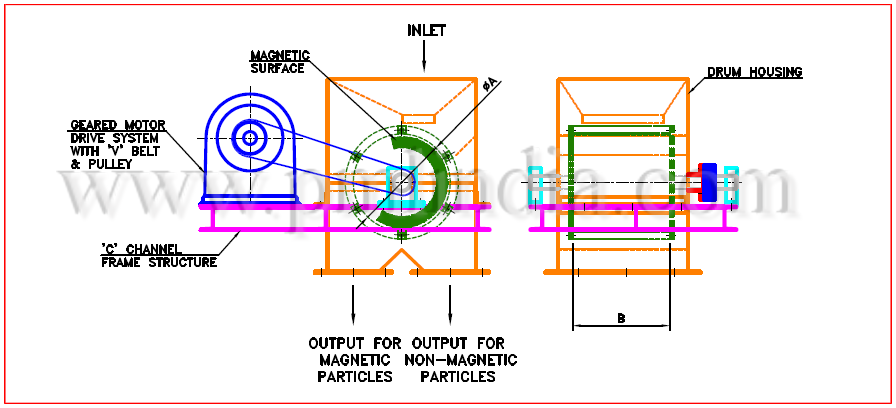
Material flows onto the rotating drum, where a stationary magnetic assembly inside the shell captures tramp metal and holds it to the drum's stainless steel surface. Clean product falls freely to a discharge point. As the drum keeps turning, cleats sweep the captured ferrous debris through and out of the magnetic field, discharging it separately — continuous, self-cleaning separation with no manual intervention.

High-Intensity or Low-Intensity
| Grade | Magnets | Field Strength | Max. Operating Temp. |
| High-Intensity | NdFeB | 4,500 Gauss | 80°C |
| Low-Intensity | Ferrite | 1,200 Gauss | 250°C |
Standard Range (With SS Housing & Drive)
| Model No. | Grade | Diameter (mm) | Length (mm) |
| MDHL1 / MDHH1 | Low / High | 300 | 300 |
| MDHL2 / MDHH2 | Low / High | 300 | 450 |
| MDHL3 / MDHH3 | Low / High | 400 | 600 |
| MDHL4 / MDHH4 | Low / High | 450 | 750 |
| MDHL5 / MDHH5 | Low / High | 500 | 1000 |
The same 5 sizes are available as a standalone drum without housing and drive, for OEMs integrating the drum into their own equipment.
Key Advantages
- Truly Continuous
Self-cleaning drum action means no downtime for manual cleaning, even in heavy-contamination applications.
- Protects Downstream Equipment
Guards crushers, grinders, pulverisers and process equipment from tramp metal damage.
- Reduces Fire and Explosion Risk
Removing ferrous sparks-risk material is critical in plants handling combustible or explosive materials.
- PLC/VFD-Ready
Can be equipped with PLC and VFD control for integration into automated lines.
Where It's Used
Minerals and chemicals, food and flour, plastics, grains, sand, fertilisers, abrasives, glass, slag, ores, rock and refractory processing — anywhere high-volume bulk material needs continuous iron removal. For thicker slurries and semi-fluid process lines specifically, see our iron removal from oil & process liquids page, for foundry sand and metal recycling, see our foundry & metal recycling page, or for mining, cement and aggregate processing, see our mining, cement & aggregates page.
What We Need for a Custom Drum Separator Quote
- Type of material (sticky, granular, free-flowing, lumps, etc.)
- Size and level/percentage of contamination
- Flow rate of material
- Size and density of the material particle
Frequently Asked Questions
Do I need housing and drive, or just the drum?
If you're integrating into existing equipment, the standalone drum is often enough. For a complete, ready-to-install unit, order with the SS housing and drive package.
Can multiple drums be used together?
Yes — PML offers comprehensive systems combining 2 or 3 drum separators with other magnetic equipment in series, to bring output contamination down to minimum PPM.
How does self-cleaning work without stopping the drum?
The magnet inside is stationary while the drum shell rotates — once captured material rotates past the edge of the internal magnet's field, it releases automatically into a separate discharge, with no interruption to the drum's rotation.
What sizes are available?
5 standard sizes, from 300mm to 500mm diameter and 300mm to 1000mm length — the same 5 sizes are available with or without SS housing and drive.
What's the difference between high and low intensity?
High-intensity NdFeB reaches 4,500 Gauss up to 80°C; low-intensity ferrite reaches 1,200 Gauss but tolerates higher temperatures up to 250°C.
Case Studies: Where PML Drum Separators Are Already at Work
SGC-TRADEX LLP
- Problem
- SGC-TRADEX needed to remove iron pieces from animal feed and soybean flakes moving through a square pipe. A standard manually-cleaned magnet would have meant frequent production stops to clear captured iron — unworkable at their material volumes.
- Solution
- PML supplied an Automatic-Clean Drum Separator, built for continuous heavy material flow with no manual cleaning downtime.
- Result
- SGC-TRADEX now processes up to 50 tonnes of material per hour, with manual-cleaning downtime eliminated entirely while keeping both product purity and line speed intact.
Rail Wheel Factory
- Problem
- After shot-blasting, Rail Wheel Factory's foundry sand carried heavy iron contamination — residual shot balls and fine metal fragments. As a public sector unit, the reuse target was strict: at least 95% metal removal.
- Solution
- PML advised against a single-stage setup and designed a double-stage Drum Separator system instead, running a live material trial to prove it could handle the mix of sand and shot-blasting balls.
- Result
- The trial exceeded the 95% target for iron contamination removal. Rail Wheel Factory validated the technology, secured a reliable way to recycle its foundry sand, and protected its downstream moulding machinery.
Why Buy From PML
- 65+ years of magnetic separation engineering — trusted by Ambuja Cements, Ultratech Cements, Sterlite Industries and Metso Minerals, among others.
- Made and tested in-house — every drum is manufactured and checked to its stated Gauss rating.
- Full intensity range — from 1,200 Gauss (up to 250°C) to high-intensity 4,500 Gauss (up to 80°C).
- Magnetic calibration and audit services available to verify field strength over time.
Need a custom diameter, length or multi-drum system? Enquire now and our engineering team will size the right separator for your line.
Why Magnetic Strength Drops in Ferrous Separators (and When to Replace)
Separation efficiency falls as magnetic strength decreases. Below are the most common causes of reduced field strength in NdFeB (neodymium) magnetic separation equipment, along with the warning signs that indicate a magnet or separator needs replacing.
Causes of Reduced Magnetic Strength
- Thermal demagnetization: Standard Neodymium-Iron-Boron (NdFeB) grades lose magnetic strength when exposed to temperatures above their rating — often starting at 80°C / 176°F for standard grades. Exceeding these limits causes a permanent loss of magnetic flux.
- Corrosion and core oxidation: NdFeB is highly iron-rich and oxidizes quickly. If moisture, washdown liquids, or corrosive chemicals breach the outer stainless steel cladding, the magnet swells, crumbles, and loses field strength.
- Mechanical damage and internal cracking: NdFeB is brittle. Dropping magnetic tubes during cleaning, or subjecting them to heavy equipment vibration, causes internal micro-fractures that break the continuous magnetic circuit.
- Strong opposing magnetic fields: A sufficiently strong opposing field can overcome a material's coercivity and flip or randomize its magnetic domain polarity. High alternating current (AC) electric fields, in particular, create powerful local alternating magnetic fields that rapidly scramble domain alignment.
- Material buildup ("air gap" effect): Accumulated fine iron on the surface acts as a barrier, pushing the active magnetic field further away from incoming material. Because magnetic force decays exponentially with distance, even a few millimetres of buildup severely reduces capture rates.
- Increased process velocity or burden depth: Running material too fast, or in overly thick layers, prevents fine ferrous particles from spending enough time in the peak magnetic field zone to be pulled out of the flow.
Signs an NdFeB Magnet or Separator Needs Replacing
- Drop in gauss rating: Annual or semi-annual gauss testing shows a permanent drop of 10–15% or more from the baseline specification.
- Bulging or "pillow" swelling: The protective stainless steel tube cladding looks warped, swollen, or cracked — a sign of internal oxidation where rust has expanded inside the shell.
- Dead spots along the field: Measuring with a gauss meter reveals localised spots with zero or drastically lower magnetic pull across the grid or tube surface.
- Downstream metal contamination: Ferrous fines or tramp iron start showing up in final product testing or downstream machinery detectors despite the separator being clean.
- Structural casing punctures: Scratches, gouges, or pinhole leaks in the stainless steel jacket expose the internal magnetic circuit to moisture and process fluids.
Regular gauss testing (at least annually) is the most reliable way to catch strength loss before it affects downstream product purity — PML's own range of Gaussmeters and magnetic field meters covers this. If you're seeing any of the signs above, talk to our team about testing or replacing your separator.


