


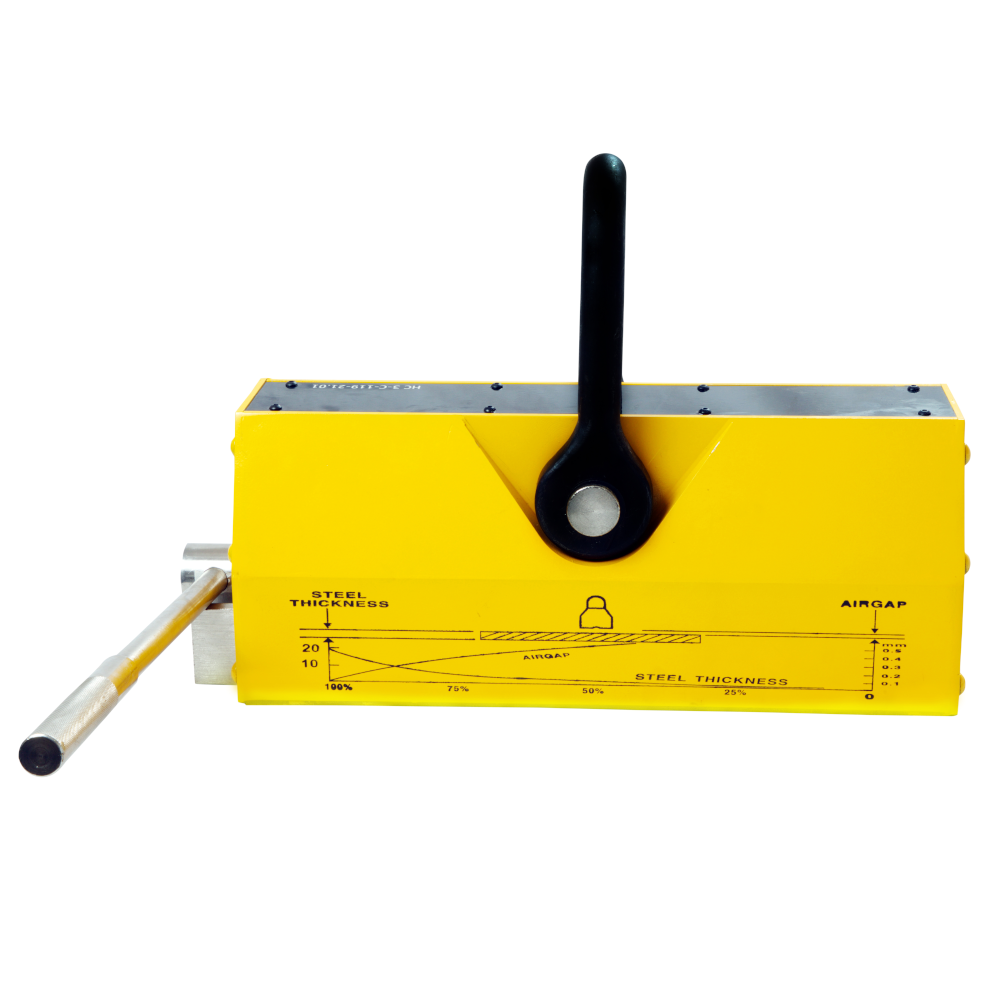
Product Details
At a Glance
A permanent magnetic lifter replaces slings and clamps with a magnet switched on and off with a single lever, for fast, safe lifting of steel plates, sheets, bars and coils. PML's 3x factor-of-safety lifters range from 100 kg to 3,000 kg capacity for certified or safety-critical lifts.
Slings and clamps slip. Rigging eats your schedule. PML Permanent Magnetic Lifters replace both with a magnet you switch on with one lever — safe to handle, fast to operate, and proven in factories, docks, warehouses and transportation industries for loading and unloading machines, hoisting iron blocks and moving magnetic material of every kind.
This range is built with a 3× rated-capacity factor of safety — exceeding international safety standards for under-the-hook devices — with models from 100 kg to 3 tonnes lifting capacity.
Available Models
| Permanent Magnetic Lifters Model | ||||||||||||
|---|---|---|---|---|---|---|---|---|---|---|---|---|
| Model No. |
Rated Lifting Capacity (Kg) |
Cylindrical Lifting Capacity (Kg) |
Max. Pull-Off Strength (Kg) |
Max Operating Temp (ᵒC) |
L (mm) |
B (mm) |
H (mm) |
Self Weight (Kg) | Min. Plate Thickness (mm) |
Job Size Range | ||
| L | W | (Ø) | ||||||||||
| 811-0 | 100 | 45 | 300 | 80 | 89 | 64 | 69 | 3 | >4 | 1200 | 800 | 40-100 |
| 811-2 | 200 | 90 | 600 | 80 | 117 | 82 | 90 | 6 | >6 | 1200 | 800 | 40-100 |
| 812-0 | 300 | 125 | 900 | 80 | 150 | 81 | 91 | 7 | >8 | 2000 | 1200 | 40-160 |
| 813-0 | 500 | 225 | 1500 | 80 | 175 | 104 | 121 | 14 | >12 | 2500 | 1500 | 40-200 |
| 813-2 | 600 | 300 | 1800 | 80 | 209 | 102 | 120 | 23 | >15 | 2500 | 2000 | 50-300 |
| 814-0 | 1000 | 450 | 3000 | 80 | 275 | 132 | 140 | 37 | >25 | 3000 | 2000 | 60-350 |
| 816-0 | 2000 | 900 | 6000 | 80 | 426 | 150 | 170 | 73 | >40 | 3500 | 2000 | 80-400 |
| 817-0 | 3000 | 1350 | 9000 | 80 | 487 | 210 | 225 | 151 | >60 | 3500 | 2000 | 80-400 |
Tested, Not Just Rated
Every safety factor we quote is verified: pull-off strength is measured on our in-house testing machine, and test certificates for the safety factor are issued by government-approved third parties. That is what the rating on the nameplate actually means.
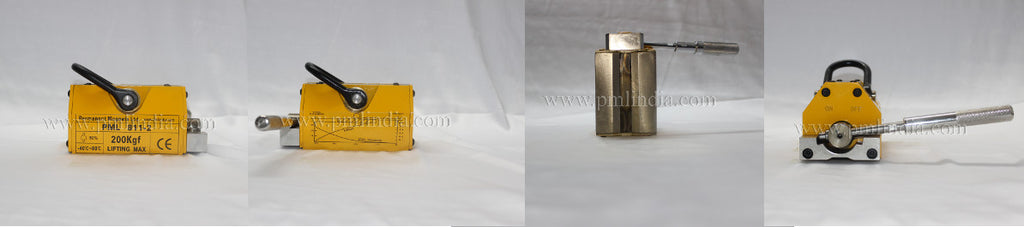
See Them in Action
Do's and Don'ts for Lifter Positioning
Correct positioning is half of lifting safety. The illustrations below show right and wrong placement:

Key Features
- 3× Factor of Safety
Rated capacity carries a three-times safety margin per international standards, verified by government-approved third-party test certificates.
- Zero Electricity Required
Permanent NdFeB magnets hold without power — no maintenance, no operating cost, no risk from power failure.
- High Capacity, Compact Body
High-energy rare-earth magnets deliver exceptional lifting capacity relative to size and weight.
- Foolproof Locking Lever
Mechanical ON/OFF switching with a lock that prevents accidental switch-off mid-lift.
- Engineered Construction
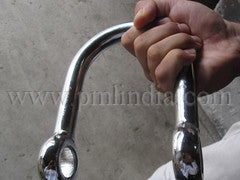
Forged hook for high mechanical strength; precision-machined single-piece assembly block for maximum efficiency.
- Gentle on the Work
No damage to the workpiece being lifted — and the lifter itself is compact, transportable, rugged and reliable.
What This Means for Your Operation
- One operator moves large, heavy workpieces safely and single-handedly
- No rigging — lifting magnets save labour and time and improve productivity
- Space is used more effectively: no need to gauge and increase stacking height
Construction & Operation
The magnetic field path is produced by NdFeB magnetic material and switched ON or OFF by turning the lever manually. Shackles on top take the crane connection. Because the magnets are permanent, the hold costs nothing to maintain and survives any power failure.
Operating Instructions
- Keep the workpiece surface and magnet pole faces clean and smooth. Ground or machined surfaces are ideal; a clean, sufficiently flat ferrous surface or casting is acceptable — the goal is full magnetic contact.
- Ensure no air gap or inclusions between the magnet poles and the job surface.
- Place the magnet on the ferrous surface, unlock the lever by pulling it out, turn to ON, release to lock. Reverse for OFF. (Never attempt to switch ON on wood or any non-magnetic surface — the lever will not operate.)
- Move the load smoothly; avoid shocks and collisions.
- Turn the lever OFF only after the load rests in a balanced position.
When Not in Use
- Apply grease or oil to the magnetic pole faces to prevent rusting.
- Rest the lifter on a thick wooden plank to protect the pole faces from damage and scratches.
Safety Instructions
- Always place the magnet on the ferrous surface in the OFF position before switching ON.
- Position the magnet over the load's centre of gravity before lifting.
- Keep all personnel out of the immediate danger zone while the load is in motion.
- Confirm the lever is OFF only after the load rests securely in balance.
Understanding Real-World Lifting Capacity
A magnetic lifter's rated capacity assumes ideal conditions, and honesty about the physics keeps your team safe. Magnetic force flows as lines from the north to the south pole, and anything that restricts that flow reduces lifting ability. Four factors matter:
Load surface condition. Magnetic lines of force do not travel well through air — they need iron. Paper, dirt, rust, paint, scale or a rough finish all act like an air gap between magnet and load, cutting capacity.
Load length and width. As a load grows longer or wider it stops lying flat and droops at the edges. That sag opens an air gap, and capacity falls.
Load thickness. The thicker the load, the more magnetic lines of force it carries — up to the magnet's full capacity. Thin material carries fewer, so every magnet is rated for a minimum load thickness; below it, capacity derates. As a rule of thumb, the load should be thicker than the width of one magnet pole.
Load alloy. Low-carbon steels such as soft iron and mild steel conduct magnetic force almost as well as pure iron. Alloys containing non-magnetic elements conduct it poorly — a stainless alloy like ANSI 304 is nearly as poor a conductor of magnetic force as air. Use the reduction factors below for materials other than AISI 1020 steel:
| Materials | Reduction Factors |
| Cast Steel | 0.90 |
| 3% Silicon Steel | 0.80 |
| AISI 1995 Steel | 0.70 |
| 416 Stainless Steel | 0.50 |
| Cast Iron (Non-chilled) | 0.45 |
| Pure Nickel | 0.10 |
Frequently Asked Questions
What does "3× factor of safety" actually mean?
A lifter rated at 1000 kg is built and tested to withstand three times that pull-off force. The safety factor is verified on our in-house testing machine and certified by government-approved third parties.
Do these lifters need electricity?
No. The hold comes entirely from permanent NdFeB magnets, switched mechanically with a lever. There is nothing to plug in, nothing to maintain, and a power cut cannot drop the load.
Can I lift round bars as well as flat plates?
Yes — but capacity for round (cylindrical) workpieces is lower than for flat plate; see the Cylindrical Lifting Capacity column in the model table, and always lift from the centre of gravity.
Why does my sheet thickness matter?
Thin material cannot absorb the magnet's full field, so capacity derates below the minimum recommended thickness for each model (see the model table). For thin sheet under 5 mm, use our Double Circuit Magnetic Lifter instead — it is designed exactly for that job.
What's the capacity range across the model line?
100kg to 3 tonnes across 8 standard models — see the model table above.
What reduction factor applies to stainless steel loads?
0.50 for 416 stainless steel, versus a baseline of 1.0 for standard AISI 1020 steel — see the reduction factors table for other materials.
Why Buy From PML
- 65+ years of magnetic expertise — Permanent Magnets Ltd has designed and manufactured magnetic products for 65+ years, and our consumer range is built to the same engineering standards we supply to global industrial leaders.
- Made and tested in-house — magnets, assemblies and finished products are manufactured and quality-checked at our own facilities, so every unit performs to its stated specification.
- Honest specifications — the ratings you read on this page are the ratings you get. If your application needs a different size or strength, our engineers will tell you exactly what works — and what won't.
- Support from real engineers — from product selection to after-sales, your questions are answered by the team that builds the product.
Need help choosing, or a custom specification? Chat with our team on WhatsApp and we will help you find the right fit.
You may also like
-
Magnetic Lifters 2 times FOS
Regular price From Rs.15,500.00Regular priceRs.0.00Sale price From Rs.15,500.00 -
Double Circuit Magnetic Lifter
Regular price From Rs.21,800.00Regular price -
Magnetic Bulk Parts Lifter
Regular price From Rs.1,800.00Regular price


