


PML
Magnetic Filter
Magnetic Filter
Starting from Rs.15,000
Download Catalogue (PDF)


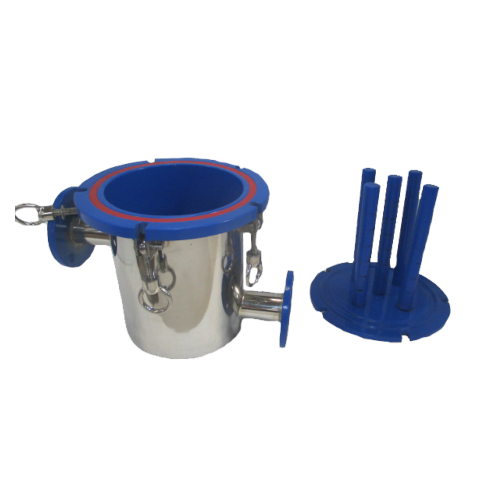
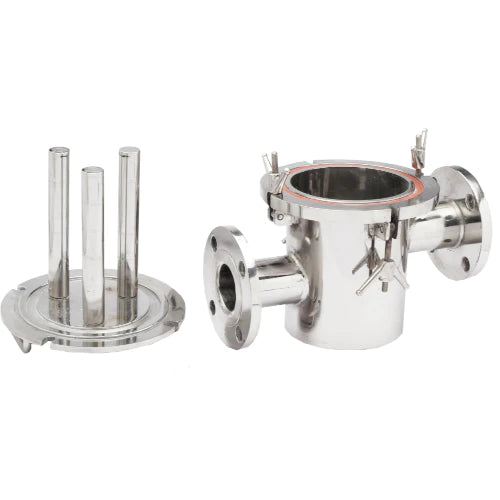
Product Details
At a Glance
A magnetic filter is an inline pipeline filter that captures ferrous particles from liquids, slurries, oils and process fluids where contamination is invisible until it damages equipment or reaches the finished product. PML's magnetic filters are rated up to 12,000 Gauss for the chemical, food, pharmaceutical, oil and hydraulic industries.
Grills and rods catch iron in dry material — but a lot of contamination travels in liquid form: suspended in oils, slurries, coolants and process fluids where it's invisible until it damages downstream equipment or shows up in the finished product. The PML Magnetic Filter — also called a trap magnet or in-line magnet — is built for exactly that: an inline pipeline filter using high-intensity NdFeB or ceramic magnets to pull ferrous particles as small as 10 microns out of a flowing liquid stream.
With 65+ years of permanent magnet engineering behind it, PML is one of India's established magnetic filter manufacturers, supplying the chemical, food, pharmaceutical, oil and hydraulic industries.
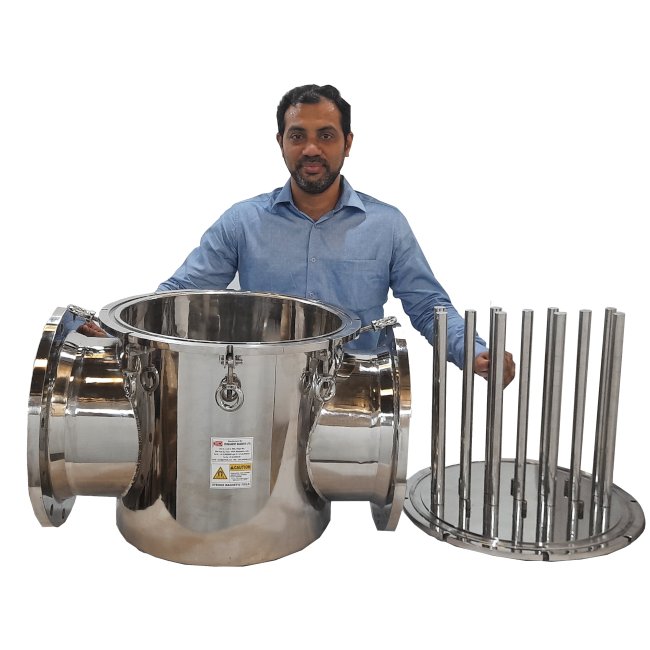
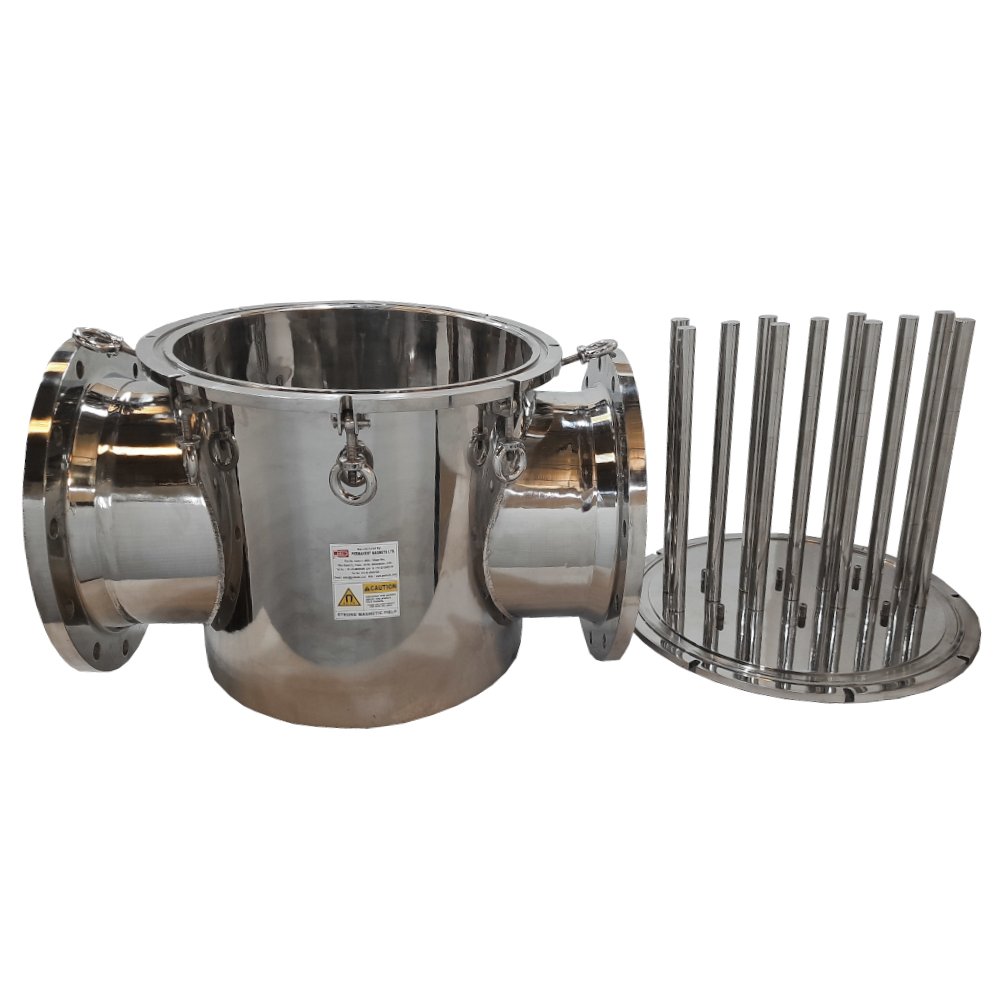
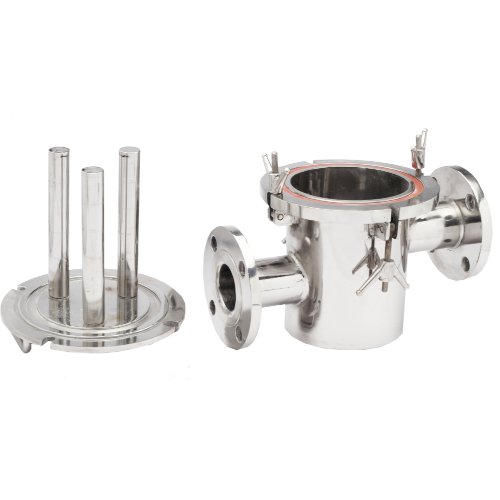
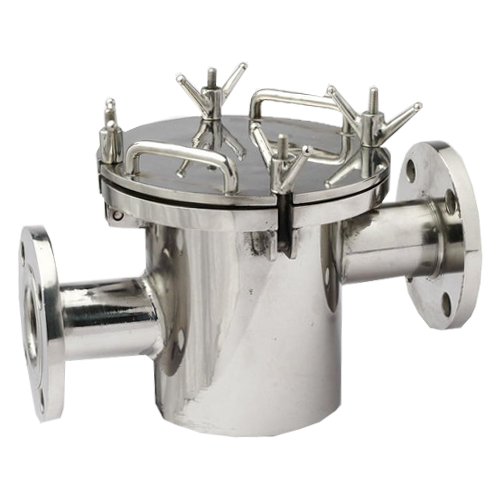
How It Works
The filter is installed inline along the fluid flow path. As liquid passes through the housing, it travels around high-intensity magnetic elements arranged in a circular format, maximising exposure to the field. Fine ferrous particles are captured and held on the elements; collected iron is removed manually by lifting the top lid, or automatically in self-cleaning models via a drain-plug flush.
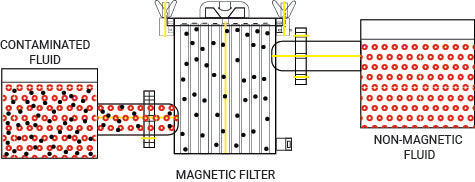
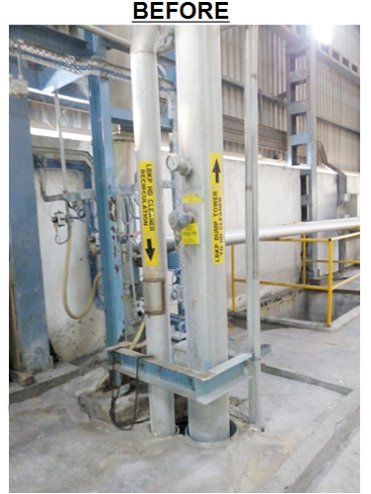
Before & After: What the Filter Captures
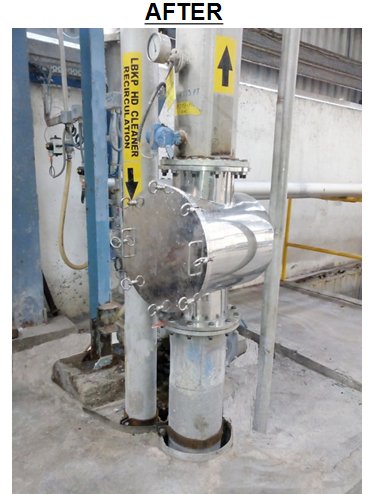
Manually Cleaned vs. Self-Cleaning
- Manually Cleaned (11,000 Gauss)
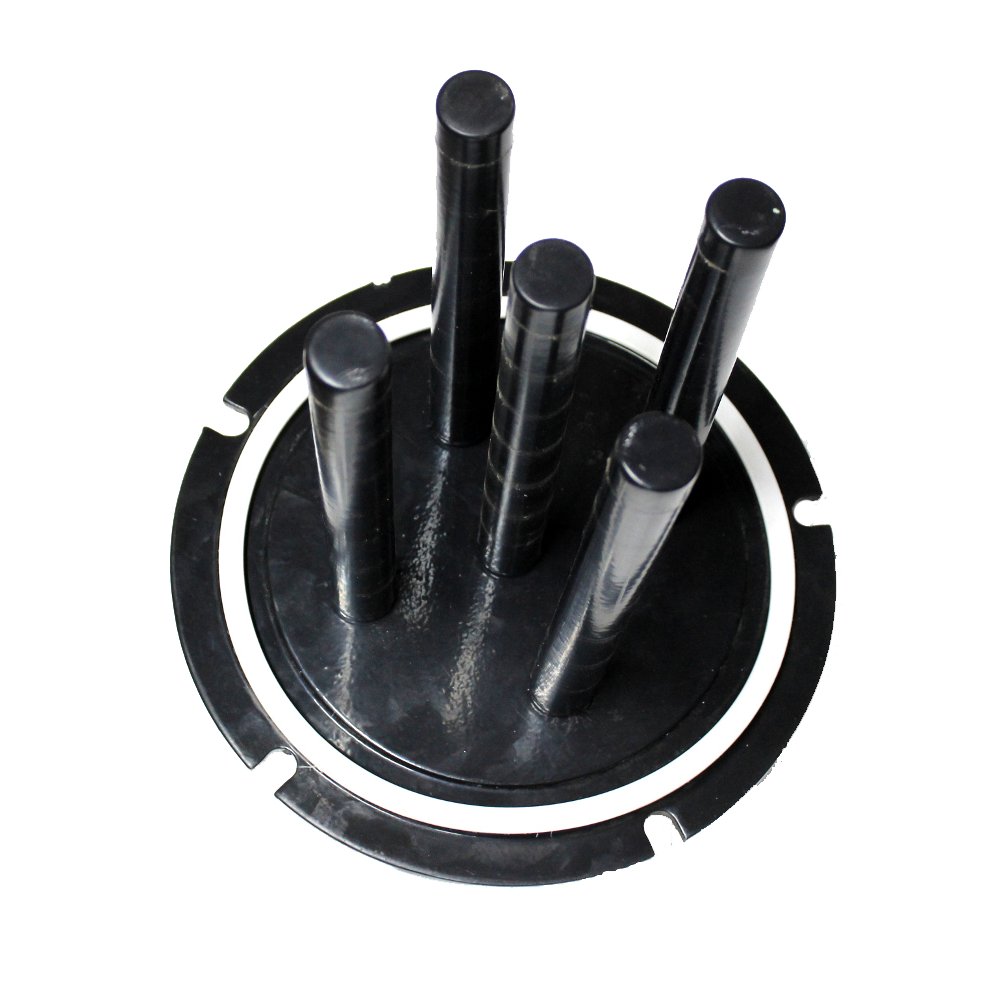
Magnetic elements fixed to the top lid in a circular array. Iron is removed by lifting the lid off after use.
- Self-Cleaned (6,500 Gauss)
Elements sit inside removable sleeves — lifting the lid pulls the elements clear of the sleeves, dropping the trapped iron to the base for flush-out through the drain plug with pressurised water, without full disassembly.
Food-Grade Coating Options
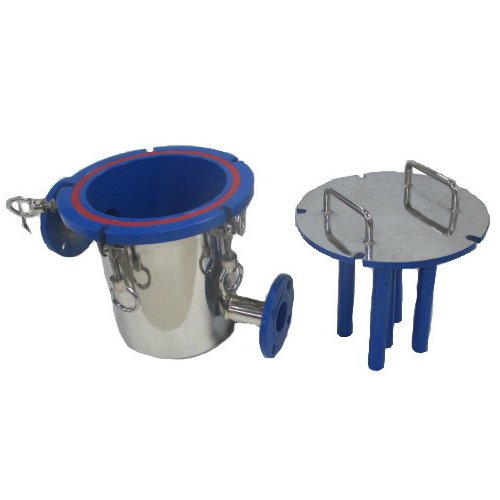
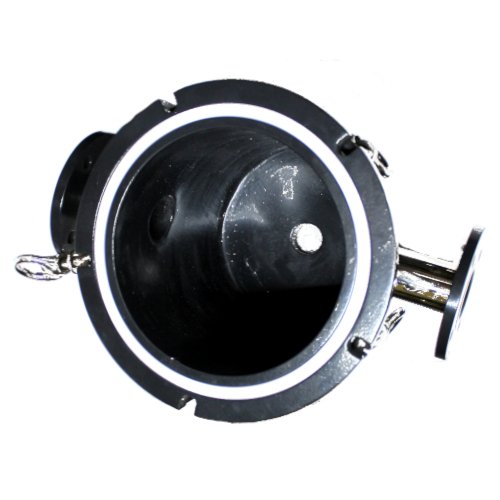
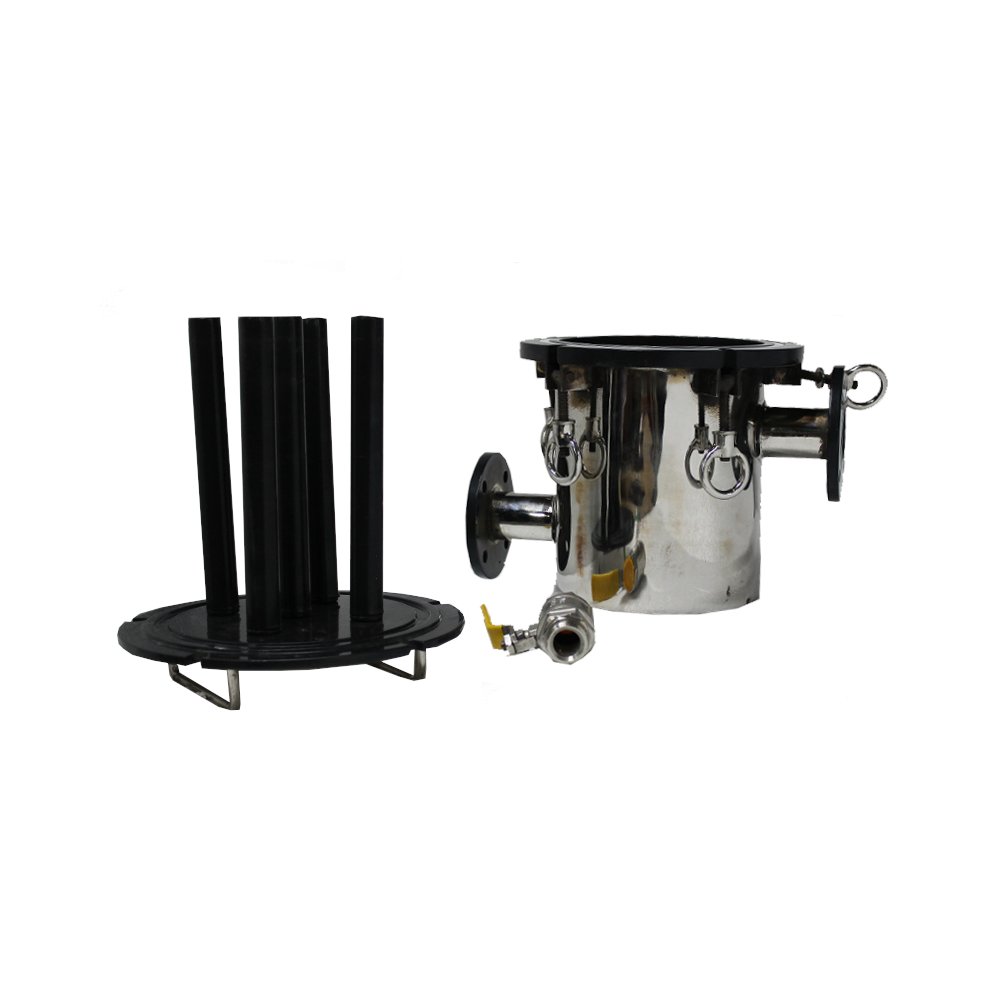
For food, pharma and other hygienic-processing lines, the filter housing is available with a PTFE or an anti-static, food-grade ETFE coating in place of bare stainless steel.
PTFE coating:
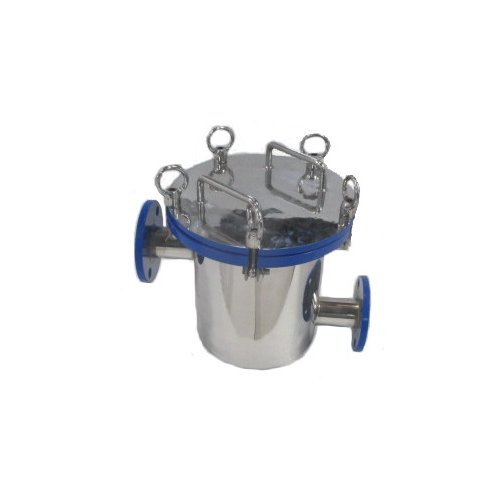
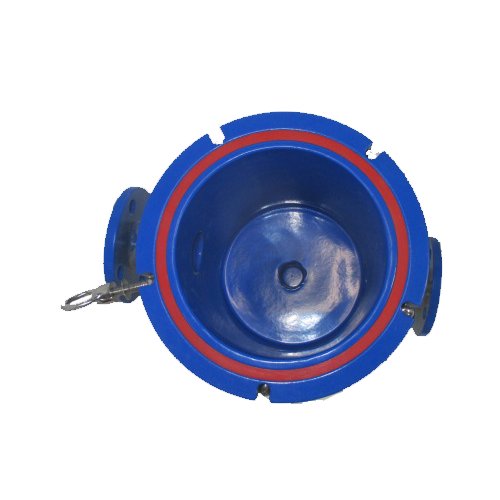
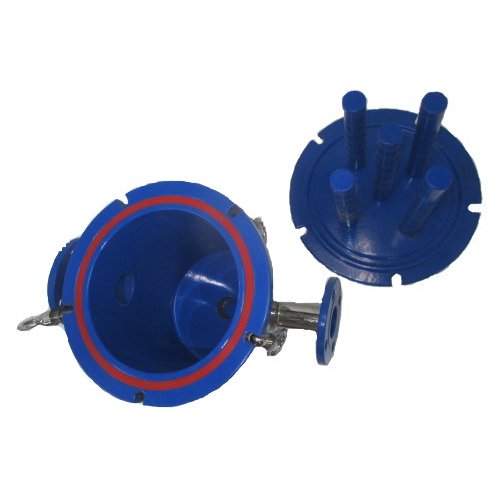
ETFE anti-static, food-grade coating:

Where It's Used
Liquid pharmaceutical and food products, chemicals and solvents, lubricants and hydraulic oils, coolants, slurries and semi-fluid materials, paint pigments and adhesives, and ceramic and paper industry process fluids. See how customers in oil and liquid processing are using this equipment on our iron removal from oil & process liquids page, in textile manufacturing on our removing rust stains from fabric page, in plastics and chemical processing on our plastics & chemical processing page, in paint and pigments on our removing iron from paint & pigments page, or in pharmaceutical processing on our pharmaceutical processing page.
Standard Range
| Standard Permanent Magnetic Filter (11,000 Gauss, ASA 150 flanges) | |||||
|---|---|---|---|---|---|
| Model No. | Pipe Size | Height A (mm) | Dia. B (mm) | Elements | Flow Rate (L/min) |
| F001 / FH001 | 1″ | 200 | 150 | 5 | 200 |
| F002 / FH002 | 2″ | 250 | 200 | 5 | 500 |
| F003 / FH003 | 2″ | 250 | 200 | 7 | 500 |
| F004 / FH004 | 3″ | 300 | 300 | 9 | 1200 |
| F005 / FH005 | 3″ | 450 | 300 | 12 | 2000 |
| Super High Intensity Magnetic Filter (12,000 ± 500 Gauss, max. 80°C) | |||||
| SF001 | 1″ | 200 | 150 | 5 | 200 |
| SF004 | 3″ | 300 | 300 | 9 | 1200 |
| SF005 | 3″ | 450 | 300 | 12 | 2000 |
Standard units are rated for 5 kg/sq cm and 80°C operation and can be engineered for higher pressure or up to 200°C on request. High-intensity 9,000 Gauss versions rated to 250°C are also available.
What We Need for a Custom Filter Quote
- Type of fluid
- Flow rate
- Size and concentration of contamination
- Inlet and outlet flange connection size
- Required processing volume
Frequently Asked Questions
Manual or self-cleaning — which do I need?
Self-cleaning is the better fit for continuous, high-throughput lines where downtime for manual lid removal is costly. Manually cleaned units are simpler and cost less where cleaning cycles are infrequent.
What's the smallest particle size it captures?
Down to 10 microns, at the standard 11,000 Gauss rating.
Can these run in series?
Yes — PML offers comprehensive filtration systems using 2 or 3 filters in series to bring output contamination down to a minimum PPM level.
What flow rates can it handle?
From 200 L/min on the smallest 1″ model up to 2,000 L/min on the largest 3″ model — see the standard range table above.
What food-grade coating options are available?
PTFE coating or an anti-static, food-grade ETFE coating, in place of bare stainless steel, for food, pharma and other hygienic-processing lines.
Case Studies: Where PML Magnetic Filters Are Already at Work
PCBL Limited
- Problem
- PCBL produces fine carbon powder from recycled mineral oil and was seeing final product degradation from iron particle contamination. The operating conditions were extreme — 200°C and 25 kg/cm² pressure — which ruled out standard filter designs.
- Solution
- PML engineered a specially customised magnetic filter built to withstand these harsh temperature and pressure conditions.
- Result
- The custom filter successfully isolated and removed the iron particles from the oil, significantly elevating the customer's final product quality.
Indo Count Industries Limited
- Problem
- Indo Count was seeing fabric contamination in the form of rusting stains caused by iron particles, traced back to the BMC water and MS process pipelines.
- Solution
- PML recommended installing magnetic filters at the BMC water line and immediately before water entered the fabric manufacturing process.
- Result
- Iron particle contamination dropped sharply, cutting fabric rejection and improving overall textile quality. Indo Count now repeatedly purchases PML magnetic filters for its expansion projects.
Shapoorji Pallonji Energy Private Limited
- Problem
- At Shapoorji Pallonji's Kakinada site, crude oil is extracted from the sea using heavy pumps. Fine iron and ferromagnetic particles in the oil were clogging and damaging the pumps.
- Solution
- PML designed a high-pressure magnetic filter built around a high-intensity magnetic circuit generating over 12,500 Gauss, and supplied three units to the site.
- Result
- The filters capture 99% of iron and ferromagnetic particles before they reach the pumps, cutting pump replacement and maintenance costs and improving the quality of the extracted crude oil.
Why Buy From PML
- 65+ years of magnetic separation engineering — supplying magnetic filters to India's food, pharmaceutical, chemical, oil and paper industries.
- Made and tested in-house — every filter is hydraulically tested to check for leakage at welds and seals before dispatch.
- Full intensity range — from 9,000 Gauss (250°C) to 12,000 Gauss super-high-intensity, plus custom-designed systems.
- Magnetic calibration and audit services available to verify field strength over time.
Need a custom flange size, flow rate or multi-stage system? Enquire now and our engineering team will size the right filter for your line.
Why Magnetic Strength Drops in Ferrous Separators (and When to Replace)
Separation efficiency falls as magnetic strength decreases. Below are the most common causes of reduced field strength in NdFeB (neodymium) magnetic separation equipment, along with the warning signs that indicate a magnet or separator needs replacing.
Causes of Reduced Magnetic Strength
- Thermal demagnetization: Standard Neodymium-Iron-Boron (NdFeB) grades lose magnetic strength when exposed to temperatures above their rating — often starting at 80°C / 176°F for standard grades. Exceeding these limits causes a permanent loss of magnetic flux.
- Corrosion and core oxidation: NdFeB is highly iron-rich and oxidizes quickly. If moisture, washdown liquids, or corrosive chemicals breach the outer stainless steel cladding, the magnet swells, crumbles, and loses field strength.
- Mechanical damage and internal cracking: NdFeB is brittle. Dropping magnetic tubes during cleaning, or subjecting them to heavy equipment vibration, causes internal micro-fractures that break the continuous magnetic circuit.
- Strong opposing magnetic fields: A sufficiently strong opposing field can overcome a material's coercivity and flip or randomize its magnetic domain polarity. High alternating current (AC) electric fields, in particular, create powerful local alternating magnetic fields that rapidly scramble domain alignment.
- Material buildup ("air gap" effect): Accumulated fine iron on the surface acts as a barrier, pushing the active magnetic field further away from incoming material. Because magnetic force decays exponentially with distance, even a few millimetres of buildup severely reduces capture rates.
- Increased process velocity or burden depth: Running material too fast, or in overly thick layers, prevents fine ferrous particles from spending enough time in the peak magnetic field zone to be pulled out of the flow.
Signs an NdFeB Magnet or Separator Needs Replacing
- Drop in gauss rating: Annual or semi-annual gauss testing shows a permanent drop of 10–15% or more from the baseline specification.
- Bulging or "pillow" swelling: The protective stainless steel tube cladding looks warped, swollen, or cracked — a sign of internal oxidation where rust has expanded inside the shell.
- Dead spots along the field: Measuring with a gauss meter reveals localised spots with zero or drastically lower magnetic pull across the grid or tube surface.
- Downstream metal contamination: Ferrous fines or tramp iron start showing up in final product testing or downstream machinery detectors despite the separator being clean.
- Structural casing punctures: Scratches, gouges, or pinhole leaks in the stainless steel jacket expose the internal magnetic circuit to moisture and process fluids.
Regular gauss testing (at least annually) is the most reliable way to catch strength loss before it affects downstream product purity — PML's own range of Gaussmeters and magnetic field meters covers this. If you're seeing any of the signs above, talk to our team about testing or replacing your separator.
You may also like
-
-
-
Magnetic Rods
Regular price From Rs.2,150.00Regular price


