


PML
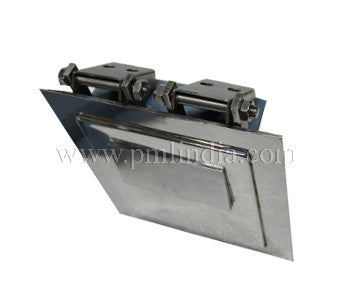
Magnetic Plates
Magnetic Plates
Starting from Rs.1,373
Download Catalogue (PDF)


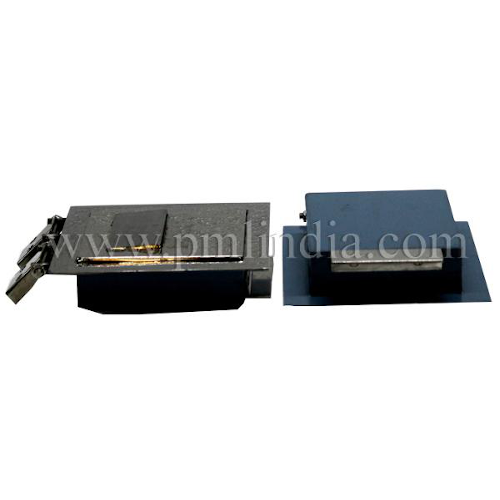
Product Details
At a Glance
A magnetic plate is a flat magnetic separator mounted directly in the flow path to trap ferrous contamination from powdery, moist, lumpy or abrasive materials that don't flow cleanly through a grill or cartridge filter. PML's magnetic plates run from 1,200 to 4,500 Gauss depending on grade, for continuous operation up to 250°C, across food, tobacco, chemical, pharmaceutical, foundry sand, mineral and detergent processing lines.
Not every material flows cleanly enough for a grill or a filter. Powdery, moist, lumpy or abrasive products — and large debris that would choke or wear out a cartridge-based separator — need a different approach. The PML Magnetic Plate solves this by sitting directly in the material's path: mounted above a conveyor, below a drive pulley, or at a discharge point, in flat or curved form, pulling tramp iron and fine ferrous fines out as product passes by.
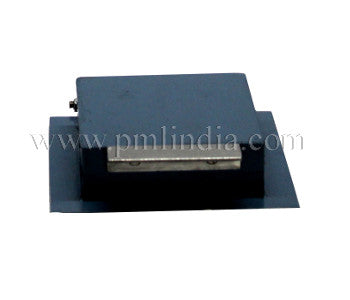
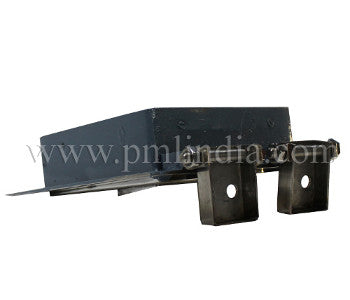
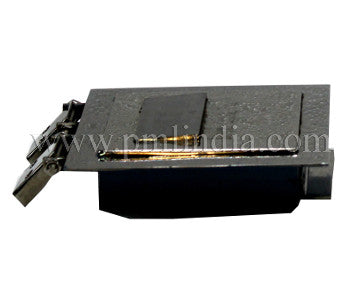
Where It's Used
CTC tea machinery, biscuit stacking lines, and general iron separation across food (tea, spices, coffee, cocoa, milk powder), tobacco, chemicals, fertilisers, pharmaceuticals, foundry sand, cattle feed, minerals and detergents. Multiple plates positioned along a line are also used to guide and separate ferromagnetic sheet and container stock — M.S. sheets and tin containers — preventing them from falling back onto the conveyor. See how this fits into a grain, flour or feed line on our iron removal from grain, flour & feed page.
How It Works
The plate sits in the material's flow path, its magnetic field penetrating the passing product and holding tramp iron to the surface until it's cleaned off. High-strength plates (Strontium Ferrite or Rare Earth) reach up to 6 inches into the conveyed layer, so even thin material streams on fast belts get proper coverage. Threaded mounting holes make positioning straightforward, and hinged models swing open for quick manual cleaning.


Key Advantages
- No Power, No Maintenance
A purely passive permanent-magnet system — nothing to wire, nothing to service beyond periodic cleaning.
- Mount Above or Below
Works positioned over the material flow or underneath, depending on your line layout.
- Reaches Into the Product
High-strength versions pull ferrous fines from up to 6" into the material layer — not just off the surface.
- Swing-Open Cleaning
Hinged installation lets you clean the captured iron off in seconds, without removing the unit.
Construction
Two plate types cover most applications: a flat plate for straight chutes and conveyor sections, and a curved plate that follows the profile of a pulley or rounded discharge point. Both are built with threaded mounting holes for straightforward installation.


Standard Range
| High-Strength Magnetic Plate (NdFeB, 4,500 ± 500 Gauss, max. 80°C, attraction 3″–4″) | ||
|---|---|---|
| Model No. | Size (A×B×C mm) | Weight (kg approx.) |
| HMP-10 | 100×100×31 | 2 |
| HMP-15 | 150×150×31 | 4 |
| HMP-20 | 200×200×31 | 7.5 |
| HMP-25 | 250×250×31 | 12 |
| HMP-30 | 300×300×31 | 16 |
| HMP-35 | 350×350×36 | 26 |
| HMP-40 | 400×400×36 | 35 |
| HMP-45 | 450×450×36 | 41 |
| HMP-50 | 500×500×36 | 50 |
| Low-Strength Magnetic Plate (Ferrite, 1,200 ± 300 Gauss, max. 250°C, attraction 4″–5″) | ||
| LMP-10 | 100×100×46 | 3 |
| LMP-20 | 200×200×46 | 9 |
| LMP-30 | 300×300×46 | 19 |
| LMP-40 | 400×400×51 | 38 |
| LMP-50 | 500×500×51 | 58 |
What We Need for a Custom Plate Quote
- Type of material being processed
- Flow rate
- Size and concentration of expected contamination
- Dimensions of the flow passage or conveyor
Frequently Asked Questions
Above the conveyor or below — which is right for me?
Above-mounted plates work well for general tramp iron removal from a flowing bed of material; below-mounted (under the drive pulley) is often used for fine fines close to the belt surface. Tell us your layout and we'll recommend the right position.
How is the plate cleaned?
Hinged installations swing open for quick manual cleaning of the captured iron — no tools or power involved.
Do you build curved plates?
Yes — both flat and curved profiles are available to match your chute or conveyor geometry.
What Gauss ratings are available?
From 1,200 Gauss (ferrite, up to 250°C) to 4,500 Gauss (NdFeB, up to 80°C) — see the standard range table above.
How far into the material does it reach?
High-strength plates pull ferrous fines from up to 6 inches into the material layer, not just off the surface.
Case Study: Where PML Magnetic Plates Are Already at Work
ArcelorMittal Nippon Steel India Pvt Ltd
- Problem
- ArcelorMittal Nippon Steel had a safety problem on a live conveyor belt system, where an electromagnet was used to hold mild steel cutting sheets in place. The setup involved extensive wiring, frequent coil burnouts, dangerous overheating, and a high risk of cut cables.
- Solution
- PML reviewed the setup, removed the electromagnet, and replaced it with a custom-built permanent magnet device that holds the sheets mechanically — with no electrical supply at all.
- Result
- ArcelorMittal Nippon Steel eliminated 80% of the electricity previously used to hold the sheets, removing the wiring, overheating and electrical breakdown risks entirely. The energy-saving project won an internal company award.
Why Buy From PML
- 65+ years of magnetic separation engineering — Permanent Magnets Ltd has supplied iron-removal equipment across food, pharma, chemical and mineral processing industries for 65+ years.
- Made and tested in-house — every plate is manufactured and quality-checked at our own facilities to its stated Gauss rating.
- Wide strength range — from 1,200 Gauss ferrite to 4,500 Gauss NdFeB, matched to your contamination and budget.
- Magnetic calibration and audit services available to verify field strength over the life of the unit.
Need a custom size or mounting configuration? Enquire now and our engineering team will size the right plate for your line.
Why Magnetic Strength Drops in Ferrous Separators (and When to Replace)
Separation efficiency falls as magnetic strength decreases. Below are the most common causes of reduced field strength in NdFeB (neodymium) magnetic separation equipment, along with the warning signs that indicate a magnet or separator needs replacing.
Causes of Reduced Magnetic Strength
- Thermal demagnetization: Standard Neodymium-Iron-Boron (NdFeB) grades lose magnetic strength when exposed to temperatures above their rating — often starting at 80°C / 176°F for standard grades. Exceeding these limits causes a permanent loss of magnetic flux.
- Corrosion and core oxidation: NdFeB is highly iron-rich and oxidizes quickly. If moisture, washdown liquids, or corrosive chemicals breach the outer stainless steel cladding, the magnet swells, crumbles, and loses field strength.
- Mechanical damage and internal cracking: NdFeB is brittle. Dropping magnetic tubes during cleaning, or subjecting them to heavy equipment vibration, causes internal micro-fractures that break the continuous magnetic circuit.
- Strong opposing magnetic fields: A sufficiently strong opposing field can overcome a material's coercivity and flip or randomize its magnetic domain polarity. High alternating current (AC) electric fields, in particular, create powerful local alternating magnetic fields that rapidly scramble domain alignment.
- Material buildup ("air gap" effect): Accumulated fine iron on the surface acts as a barrier, pushing the active magnetic field further away from incoming material. Because magnetic force decays exponentially with distance, even a few millimetres of buildup severely reduces capture rates.
- Increased process velocity or burden depth: Running material too fast, or in overly thick layers, prevents fine ferrous particles from spending enough time in the peak magnetic field zone to be pulled out of the flow.
Signs an NdFeB Magnet or Separator Needs Replacing
- Drop in gauss rating: Annual or semi-annual gauss testing shows a permanent drop of 10–15% or more from the baseline specification.
- Bulging or "pillow" swelling: The protective stainless steel tube cladding looks warped, swollen, or cracked — a sign of internal oxidation where rust has expanded inside the shell.
- Dead spots along the field: Measuring with a gauss meter reveals localised spots with zero or drastically lower magnetic pull across the grid or tube surface.
- Downstream metal contamination: Ferrous fines or tramp iron start showing up in final product testing or downstream machinery detectors despite the separator being clean.
- Structural casing punctures: Scratches, gouges, or pinhole leaks in the stainless steel jacket expose the internal magnetic circuit to moisture and process fluids.
Regular gauss testing (at least annually) is the most reliable way to catch strength loss before it affects downstream product purity — PML's own range of Gaussmeters and magnetic field meters covers this. If you're seeing any of the signs above, talk to our team about testing or replacing your separator.
You may also like
-
-
-
Magnetic Rods
Regular price From Rs.2,150.00Regular price


